A headset is the one piece of home working kit that sits on your head for hours, and the one most people buy last. The Dell WL7024 arrived here today, bought mainly for focused listening at a desk rather than for back-to-back calls, which is a slightly different job from the one Dell markets it for. This page sets out what Dell actually documents, what is genuinely in the box, and where a headset helps a home working setup and where it cannot.
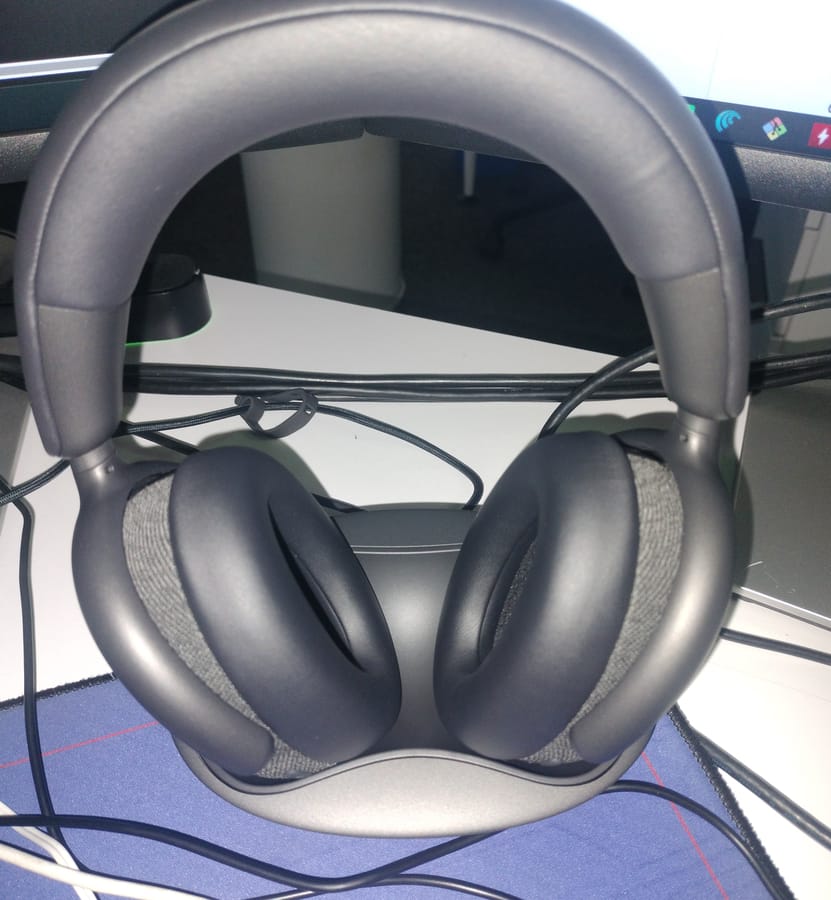
The Dell WL7024 is Dell's noise-cancelling collaboration headset, certified by Dell for Microsoft Teams in open offices and for Zoom. Dell lists dual-directional AI noise cancellation, a headband sensor that mutes or pauses when an ear cup is lifted, and up to 80 hours of listening with ANC off. It ships with a hard case and a desk charging stand.
Key Takeaways
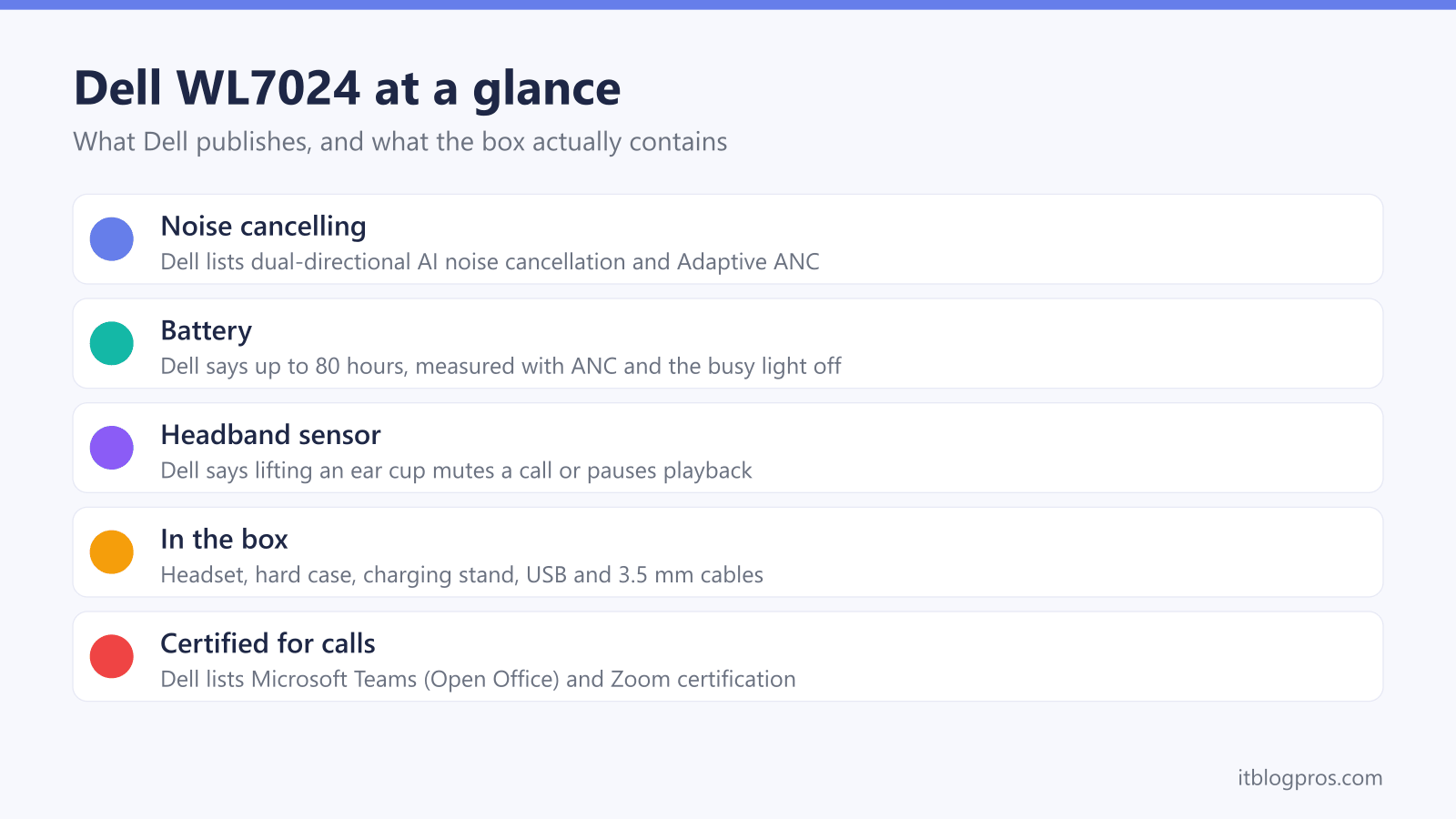
- Dell lists dual-directional AI-based noise cancellation and Adaptive ANC, which Dell says adjusts to the room rather than applying one fixed level.
- The headline 80 hours is Dell's own figure measured with the busy light and ANC switched off, so a working week with ANC on will draw more.
- The box includes a charging stand with separate left and right cradles, so the headset charges by being set down rather than by plugging in a cable, and this pack contained no USB adapter, so it pairs over Bluetooth.
- Dell lists Microsoft Teams (Open Office) and Zoom certification, with a three year limited hardware warranty and advanced exchange.
- A headset improves what you hear and how you sound, but dropped or frozen calls are a network fault, so fix the connection first.
What Dell publishes about the WL7024
Dell's product listing makes four substantive claims, and they are worth separating from the marketing around them.
The first is noise cancellation on both ends. Dell describes dual-directional AI-based noise cancellation, which covers the microphones picking your voice out of a noisy room, and Adaptive Active Noise Cancellation for what you hear, which Dell says "dynamically adjusts to different surroundings, creating a more focused listening experience". Adaptive is the useful word: it implies the level changes with the room rather than sitting at one setting.
The second is battery life, and this is where the box and the footnote disagree in spirit. The packaging carries a large 80H badge. Dell's own listing text says up to 80 hours of listening time on a full charge, then footnotes it as "based on Dell analysis (busy light and ANC off mode) of battery life usage, January 2024. Results vary depending on use, operating conditions and other factors". A headset bought for noise cancellation will be used with noise cancellation on, so treat 80 hours as the best case rather than the working figure.
The third is the headband sensor. Dell says the sensor detects when the headband is flexed and performs tasks such as mute and unmute or pause and play when either ear cup is lifted. For anyone who works with one ear uncovered to listen out for a doorbell or a child, that behaviour is worth knowing about before it surprises you mid-track.
The fourth is certification and support. Dell lists the headset as Microsoft Teams (Open Office) certified and Zoom certified, supported on Windows 11 and Windows 10 64-bit and on macOS, and covered by a three year limited hardware warranty with advanced exchange service. Open Office is the harder Teams tier to meet, which tells you where Dell aimed the microphones.
What actually comes in the box
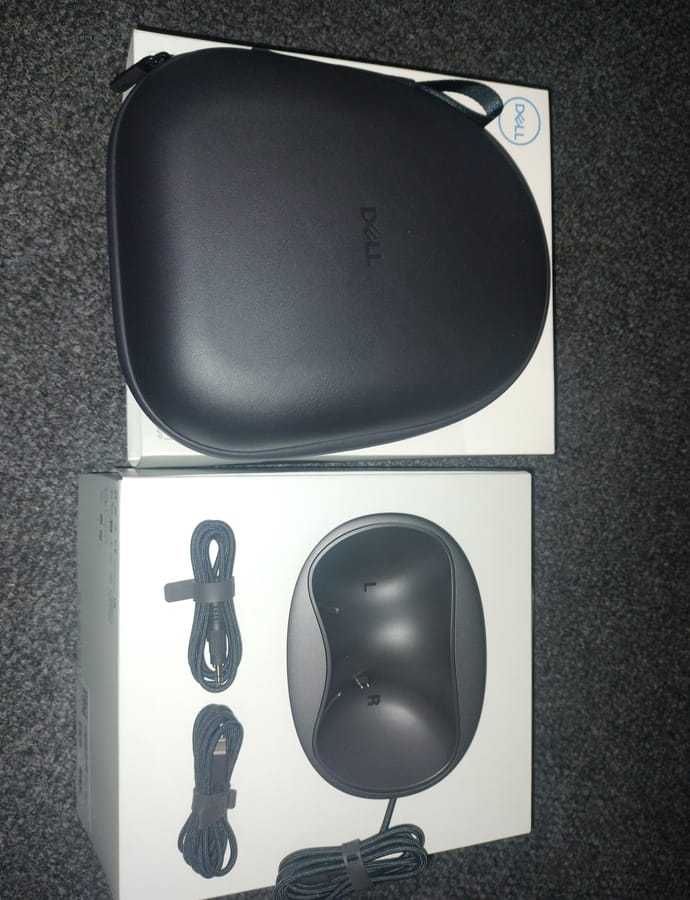
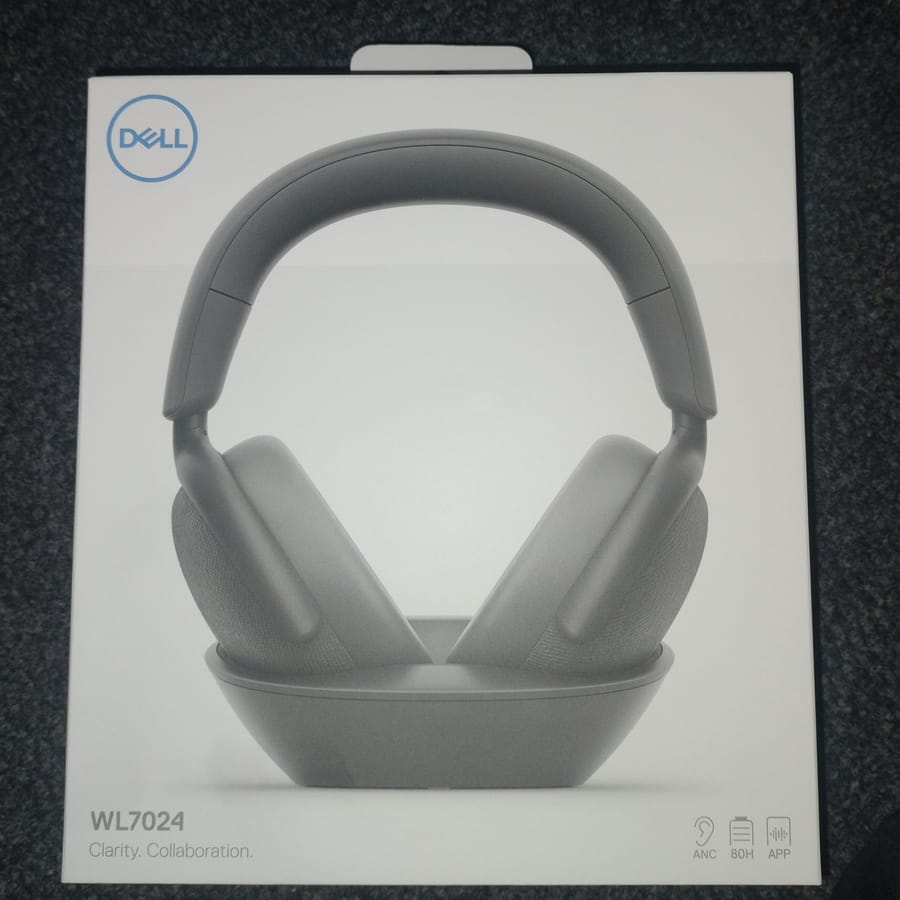
The contents panel printed on the retail box matches what came out of it: the headset, a zipped hard carry case, a charging stand, a braided USB cable and a braided 3.5 mm audio cable.
The stand is the part that changes daily habits. It has two shaped cradles marked L and R with contacts between them, and its own captive cable, so the headset charges by being put down at the end of the day rather than by finding a USB-C cable. That is the difference between a headset that is always charged and one that is flat on the morning you need it.
The case is a rigid zipped shell with a fabric-lined interior and a moulded well for the headset, which matters if the headset travels between a home desk and an office.
Where a headset helps a home working desk, and where it cannot
This site spends most of its time on the connection rather than the kit plugged into it, and the distinction matters here. A noise-cancelling headset fixes two problems: the room you are sitting in is too loud to concentrate in, and the room you are sitting in is too loud for the people you are talking to.
It fixes nothing at all about a call that stutters, freezes or drops. Those symptoms come from the link between your desk and the router, and swapping headsets simply moves the same broken audio to a nicer pair of drivers. If calls are dropping in a spare room, a loft or a garden office, the cause is almost always the connection rather than the device, and the same is true of WiFi in a shed or summerhouse. If the whole house struggles when the working day starts, the router itself is the place to look.
The honest order is connection first, then audio. A headset like this one is worth the money once calls are stable and the problem left is concentration in a noisy house.
What Dell's listing does not cover
One question buyers ask first is answered by the box itself: there is no USB wireless adapter in the pack. The contents are the headset, the case, the charging stand and the two cables, and the headset connects over Bluetooth. That matters for anyone whose work laptop blocks or restricts Bluetooth pairing, because there is no dongle here to fall back on, and it is worth checking your own machine's policy before ordering.
A few specifications are missing from Dell's listing copy altogether: the Bluetooth version, which audio codecs are supported, the weight, the charge time, and whether the headset holds two devices at once. If any of those decide the purchase, the WL7024 user guide on Dell's support site is the place to confirm them rather than a retail listing.
The WL7024's single Amazon UK listing has moved between third-party resellers and out of stock since this headset arrived, so this link runs a search of Amazon UK for the Dell WL7024 rather than pointing at one listing that may be empty. Whoever turns up, check the seller's price against Dell's own store before ordering.
What this page does not claim yet
The headset arrived today, so everything above is drawn from Dell's own documentation and from the box itself. Comfort over a full working day, how much the Adaptive ANC actually removes from a noisy room, what the battery does with ANC left on, and how the microphones handle a real call are all questions that need a working week to answer honestly. Those notes will be added here once the headset has had one.